One person's washer is...
Hydro power from washing machines! Michael Lawley at Ecoinnovation converts household appliances into enregy saving and generating inventions.
posted by f @ 2:02 AM
0 Comments

Hydro power from washing machines! Michael Lawley at Ecoinnovation converts household appliances into enregy saving and generating inventions.
posted by f @ 2:02 AM
0 Comments
A grass roots-campaign promoting ultra-low energy consuming technologies "less carbon more jobs"!
posted by f @ 12:48 AM
0 Comments
Timothy F. Geithner is Obama's ultimate choice for Secretary of the Treasury after several false starts the post that will be most crucial to Obama's economic stimulus plans is now filled. Ironically, He is having a difficult time in getting started in his new job because his resources are slim-he is working with a skeleton crew due to Obama's poor vetting of his nominees. Obama hasn't put in place the necessary manpower in the Treasury because of his poor vetting of many nominees there and in other cabinet positions. And of course, Mr Geithner was one of the poorly vetted nominees. So, logically, Mr. Geithner is the reason himself that he does not have the resources to make an economic turn-around come true?
posted by f @ 11:14 PM
0 Comments
MNN.COM > BUSINESS > GREEN JOBS
posted by f @ 4:19 AM
0 Comments

posted by f @ 12:12 PM
0 Comments
By Sarah Karlin
 Dick Koenigs discusses Energy Northwest’s White Bluffs Solar Station, one of Richland, Washington’s explorations into renewable energy production. (AP Photo/Jackie Johnston)
Before signing the $787 billion American Recovery and Reinvestment Act into law, President Obama reminded Americans that the bill will not just boost the country’s ailing economy but will help modernize the nation. “Because we know we can’t power America’s future on energy that’s controlled by foreign dictators, we are taking a big step down the road to energy independence, and laying the groundwork for a new, green energy economy that can create countless well-paying jobs,” Obama said.
Environmentalists see the stimulus as an opportunity to spur a revolution that will transform America’s old, gray, industrial economy based on coal, oil, and other dirty fossil fuels, into one that runs on clean, renewable energy. While green initiatives make up less than one-eighth of the stimulus bill, the chatter is all about green jobs, green infrastructure, and green energy. Green, green, green. But what exactly green jobs are and how such an infrastructure can be implemented are some of many questions that have yet to be answered.
The green jobs movement saw a major victory in December 2007 when Congress passed the Green Jobs Act as part of the energy bill. The act was supposed to set aside up to $125 million to train workers for jobs in the clean energy sector, but President Bush’s budget requested $0 for the initiative. The issue gained increasing notoriety during the 2008 campaign with the publication of Van Jones’ book The Green Collar Economy and his many moving speeches, like his most recent one at Powershift this year. Jones founded Green For All, a national organization dedicated to building a green economy, and has laid out his vision for a “Green New Deal” that would create programs and policies designed to fight both global warming and urban poverty by creating millions of green jobs. With more than $80 billion dollars of the $787 billion economic recovery package going toward investments in clean energy, the bill takes an important first step. Jones’ vision is still incomplete, but there are compelling reasons to take the rest of the green-collar jobs movement seriously.
Why go green?
As the economy lags, some experts say that going green may be the best way to revive our economy and save the planet. Climate scientists predict that unless we curb global warming emissions, average U.S. temperatures could increase by 3 to 9 degrees Fahrenheit by the end of the century. Global warming has been linked to deadly heat waves, an increase in wildfires, the spread of disease, and a host of public health and weather catastrophes. And while the United States makes up only four percent of the world’s population, the country is responsible for emitting 25 percent of the world’s carbon dioxide pollution. Low-income communities and communities of color also tend to be disproportionately affected by the negative impacts of a high-carbon economy.
President Obama’s Energy Secretary Steve Chu said that an environmentally friendly, energy efficient economy is America’s only option in the fight against climate change. In an article last month in The Root, Chu warned that “without swift action to reduce greenhouse gas emissions, Americans might see their way of life grind to a halt.”
That news sounds even more dismal than today’s enormous economic crisis. But the good news is that at last we have an Administration that is determined to take the action necessary to address global warming. More good news is that investing in environmentally friendly projects may be the best way to put thousands of Americans back to work. According to the Department of Labor the U.S. unemployment rate was 7.6 percent in January, the highest in 16 years. But according to the Natural Resources Defense Council’s analysis of data from the U.S. Department of Commerce, investments in energy efficiency and renewable resources create more jobs per dollar invested than tax cuts, military spending, or oil and natural gas investments.
What is a green job?
Industries that clean up environmental damage count toward the green-job tally, as well as jobs that help America transition away from fossil fuels, reduce greenhouse gas emissions, eliminate toxins, and protect our natural resources. Jessica Tovar of Communities for a Better Environment told Green for All that “the movement for green jobs is a fight for a ‘just transition’ from reckless industry practices to new, ethical and eco-friendly ones. Green jobs are about respecting and empowering both workers and the communities they live in.”
While Tovar and other politicians and activists’ vision sounds positive, the rhetoric surrounding green jobs is still unclear. Not all green jobs are created equal. A “green” factory may produce a green product but produce tons of carbon dioxide each year. Employees that mine “clean coal” in Appalachia can endanger their own health while destroying huge areas of natural habituate and contribute to an industry that still releases large amounts of pollutants into air and water.
Who qualifies for the green collar?
Green collar jobs encompass a wide array of industries. There is no one-size-fits-all description of a worker who is qualified for the field. Green careers can be found in the non-profit world of advocacy and activism, in manufacturing, construction, engineering, agriculture and even the federal government.
Currently, jobs that qualify for the green collar are workers that install solar panels, retrofit buildings, erect wind farms, and install new light rail lines. Many organizations are assisting workers in finding green collar employment. At this year’s Good Jobs, Green Jobs National Conference in Washington, D.C., organizers put together a Green Jobs Expo, showcasing the numerous green careers available to job seekers. The expo included more than 85 booths run by academic institutions, manufactures, non-profits, and government agencies.
According to a January report by the American Solar Energy Society, popular green jobs include electricians, mechanical engineers, welders, metal workers, accountants, analysts, environmental scientists, and chemists. The report found that more than 37 million jobs in renewable energy and energy efficiency could be generated by 2030—more than 17 percent of anticipated U.S. employment.
While some green jobs are limited to college educated professionals who hold advanced degrees in the sciences, engineering, and other highly technical fields, others require only a high school diploma. According to Green For All, many green collar jobs are “middle-skill,” requiring more education than high school but less than a four year degree. Many workers will be able to use the skill set they already possess to find greener, more ecological job opportunities. For example, a factory worker who helps produce gas guzzling SUVs could easily transition to work at a factory that produces parts for hybrid cars.
Some green jobs will require workers to acquire new skills. The stimulus directs $500 million over two years to the Green Jobs Act. These funds will be used to train approximately 70,000 workers for renewable energy and energy efficiency jobs.
The stimulus and green jobs
According to Green For All, greening America’s infrastructure offers the biggest bang for our buck. Green projects will create jobs and cut energy bills, pay living, family wages, and provide opportunities for professional advancement. The Natural Resources Defense Council said that investments in energy efficiency save consumers and taxpayers so much money they more than pay for themselves over the lifetime of the project.
NRDC also reported that according to a green jobs study conducted by the Political Economy Research Institute at the University of Massachusetts at Amherst, a two-year, $100 billion green investment program would create 2 million green jobs for American workers, more than 3 times as many good jobs as the oil industry. These new “good green jobs” would pay at least $16 an hour.
But such an investment might not be easy; the green economy has been hit as hard by the current financial crisis as the rest of the economy. Bank failures have made credit difficult for wind and solar developers to come by, causing them to delay projects and lay off workers. The stimulus might be able to recharge these clean energy projects. Environment America detailed the portions of the stimulus dedicated to green energy. The final bill invests $32.80 billion in clean energy, $26.86 billion in energy efficiency, and $18.95 billion in green transportation.
Big Oil still gets help
The green initiatives in the stimulus bill can help to put America on a path to clean, renewable energy, creating more jobs and protecting our planet. However, these initiatives are just a good start. To completely transform the American economy and combat global warming, the United States will need to take a stand against “big oil.”
While one-eighth of the stimulus bill directs funding towards green energy, large chunks of money are also being directed towards “business as usual” projects that will continue the cycle of pollution. For example, $27.5 billion is included for highway investments, compared to only $8.4 billion for public transportation systems. The stimulus also directs $3.4 billion for fossil energy research and development.
From regional to national, a grid that works
The United States current energy grid is regionalized and often described by environmentalists and scientists as “last century.” The current system was designed to draw energy from nearby plants, and transfer this energy to local customers. But the greenest energies do best in the most remote areas, like the plains of North Dakota to the deserts of Nevada. To transmit power from solar panels and windmills thousands of miles away to customers who need the energy, the United States will need a national system that is not only bigger but “smarter.” A New York Times article last month explained that different parts of the grid will need to be integrated and designed to deal with clean energy sources such as solar and wind, which fluctuate with weather conditions. Creating a national grid will not only take money but also work on the part of citizens, local, state, and national governments.
When people find out new powerlines are going to be built throughout their communities, there are often shouts of “not in my backyard” followed by lawsuits and other bureaucratic hurdles to completing new energy projects. The stimulus package provides $11 billion for smart grid related activities, but the New York Times article points out that money is only one of the many factors which is delaying much needed clean energy projects. The American Transmission Company, which operates in four Midwestern states, spent two years building a line of about 220 miles from Duluth, Minn. to Wausau, Wis. But it took eight years before that for the firm to win the necessary permits. As global temperatures increase and the demand on the U.S. electricity grid rises, our country does not have decades to waste in bureaucratic scuffles.
Sarah Karlin is an Editorial Intern at Campus Progress and a senior at George Washington University.
posted by mary rose lenore eng (please) @ 5:03 AM
0 Comments
What are phthalates? How are they used?
Phthalates are a class of widely used industrial compounds known technically as dialkyl or alkyl aryl esters of 1,2-benzenedicarboxylic acid. There are many phthalates with many uses, and just as many toxicological properties.
Phthalates crept into widespread use over the last several decades because of their many beneficial chemical properties. Now they are ubiquitous, not just in the products in which they are intentionally used, but also as contaminants in just about anything. About a billion pounds per year are produced worldwide.
Intentional uses of phthalates include softeners of plastics, oily substances in perfumes, additives to hairsprays, lubricants and wood finishers. That new car smell, which becomes especially pungent after the car has been sitting in the sun for a few hours, is partly the pungent odor of phthalates volatilizing from a hot plastic dashboard. In the evening's cool they then condense out of the inside air of the car to form an oily coating on the inside of the windshield.
| What are the health concerns? Much of the existing literature on phthalates' toxicological properties focuses on the old approach to toxicology: high level exposure for cancer endpoints, and occupational exposure leading to adult infertility. In the past several years, however, particularly led by Earl Gray's laboratory at the US Environmental Protection Agency, attention has turned to low-dose toxicity of phthalates during crucial windows of fetal development. As these studies have advanced, they have fundamentally changed our perception of potential health risks of phthalates. | According to Hauser et al. (2006): "Phthalates are a class of multifunctional chemicals used in a variety of consumer and personal care products. Highmolecular- weight phthalates (eg, di-2-ethylhexyl phthalate --DEHP-- and butylbenzyl phthalate --BBzP--) are primarily used as plasticizers in the manufacture of flexible vinyl, which is used in consumer products, flooring and wall coverings, food contact applications, and medical devices. Manufacturers use low-molecular-weight phthalates (eg, diethyl phthalate --DEP-- and dibutyl phthalate --DBP-) in personal care products (eg, perfumes, lotions, cosmetics), as solvents and plasticizers for cellulose acetate, and in making lacquers, varnishes, and coatings, including those used to provide timed release in some pharmaceuticals." |
While high doses of phthalates do constitute risks in the sense of traditional toxicology, these low doses change the stakes dramatically. Gray's work reveals that male reproductive development is acutely sensitive to some phthalates. For example, the phthalates dibutyl phthalate (DBP) and diethylhexyl phthalate (DEHP) produced dramatic changes in male sexual characteristics when exposure took place in utero, at levels far beneath those of previous toxicological concern. These changes included increases in the rates of hypospadias and other indications of demasculinization.
Enough questions about phthalates have been raised during the last few years for the National Toxicology Program, under the auspices of its recently established "Center for the Evaluation of Risks to Human Reproduction" (CERHR), to convene a panel of independent experts in 1999 to review scientific evidence addressing developmental threats of phthalates. The panel issued a draft report in August 2000. Its conclusions are severely restricted by the fact that few of studies necessary to address fetal impacts of phthalates have been done. For a least one of the phthalates they addressed, DEHP, the panel had serious concern about health impacts. Not surprisingly, given the state of research the report's conclusions are tentative, establishing plausible but uncertain risk. One of the key points is DEHP's impact on developing Sertoli cells, cells in the male reproductive tract that are central to sperm formation. Damaged Sertoli cells during development lead to sperm maladies in adulthood, including low sperm count. DEHP does not cause Sertoli damage directly; damage instead is caused by a metabolite of DEHP, monoethylhexyl phthalate (MEHP).
In summer 2006, two papers upped the ante considerably on possible low-level effects of phthalates. The ranges at which Gray et al. have conducted their experiments are close to the range of common human exposure, but still somewhat above. These new papers reveal biological impacts in animals well within the range of common human exposure, and show show non-monotonic action of DEHP at environmentally-relevant levels. One examined impacts on the activity of the enzyme aromatase, which is essential for masculinizing male brains. The second experimented with DEHP's ability to exacerbate allergic reactions to an allergen, providing a possible clue as to why allergy rates have gone up so much in the developed world. Non-monotonic dose response curves are important because they invalidate current approaches to developing health standards.
In May 2005: For the first time, researchers have identified an association between pregnant women’s exposure to phthalates and adverse effects on genital development in their male children. The pattern of genital changes seen in these baby boys is consistent with the "phthalate syndrome" previously observed in rodents prenatally exposed to phthalates. It is also suggestive of "testicular dysgenesis syndrome," a human health condition proposed to be linked to exposure to endocrine-disrupting compounds. The adverse effects are seen at phthalate levels below those found in one-quarter of women in the United States, based on a nation-wide survey by the Centers for Disease Control. More...
In August 2000, Puerto Rican scientists reported on an association between exposure to DEHP and premature breast development in young girls, possibly linking phthalates to trends in puberty.
In September 2000, the US Centers for Disease Control released the first substantial assessment of phthalate exposure in the American public. Their study analyzed urine metabolite residues of seven phthalates. Levels were high for several of the compounds studied, particularly the metabolite of DBP. Of greatest concern was the discovery that in their sample, an disproportionate number of women of child-bearing age bore high levels of this metabolite. Given Gray's data on fetal vulnerability, this is precisely the population that should minimize exposure to this anti-androgen.
In winter/spring 2002-2003, three studies linked phthalate exposure to reductions in semen quality. All were of men exposed to background, environmental levels of phthalates, not higher occupational levels. One showed DNA damage in sperm. Two others (one from the US, the other from India) found reductions in sperm quality in men with slightly elevated phthalate levels. Phthalate levels associated with the damage were well within the range experienced by many Americans.
The debate about regulation and public health protection
Over the past several years, debate has grown in the regulatory world about what to do about phthalates. Industry argues that years of phthalate use without visible harm prove product safety. Critics counter that animal studies establish plausible risk but that the relevant human epidemiological studies focused specifically on the impacts of fetal exposure simply haven't been done. They point, moreover, to the fact that human health endpoints consistent with phthalate damage are found in animal experiments. They also point out that certain exposures, particularly those associated with children chewing on soft polyvinyl chloride toys and patients receiving intravenous medication through polyvinyl chloride equipment may lead to very high exposures. [The CDC report, above, adds to that list of high exposure concern: the fetuses of pregnant women using cosmetics containing phthalates.]
European regulators kicked off this debate when they began to explore the possibility of bans on toys intended for infants that contained DEHP. This set in motion fierce industry lobbying from the United States to head off the ban, an effort that not only proved unsuccessful ultimately in Europe, but one that was matched in the US by a call by the Consumer Products Safety Commission for a voluntary phase-out by US manufacturers, not only from pacifiers and toys but also from certain medical devices. Several large US toy manufacturers, including Disney and Mattel, made public commitments supporting the phase-out.
The debate heated up further in the US when an industry PR firm that masquerades as a public health organization, the American Council on Science and Health, put together a panel to review the safety of phthalates. Headed by retired Surgeon General C. Everett Koop, the panel ultimately issued a flawed report that concluded phthalates were safe. Their report failed to consider several key recent publications and misrepresented another, citing the latter as stating that no kidney damage was caused when in fact the research did not assess kidney damage. They committed an even more basic error, moreover, by accepting the absence of data as proof of safety. Absence of data proves only ignorance. A devastating critique of this report was published by Health Care Without Harm (a PDF file; long download on slow modems).
The American Academy of Pediatrics entered the debate in June 2003, issuing a report in Pediatrics that recommends research on phthalates effects on the fetus and infants. Their review of the literature found that no studies had directly addressed this issue, yet animal research clearly documents harm and data from the US Centers for Disease Control shows widespread exposure.
posted by mary rose lenore eng (please) @ 4:03 AM
0 Comments
The Huffington Post is running a piece about H.R. 801 (the "Fair Copyright in Research Works Act"), the latest version of John Conyers' awful idea. The law would forbid entities like the NIH from requiring that recipients of government grants make the product of their research openly accessible. (The current practice requires articles be freely accessible after 12 months.) Instead, Conyers' proposal would require that after the American taxpayer has paid for the research, the American taxpayer must pay publishers to get access to the product of the research.
The first important word to emphasize in the last sentence is "publishers." For unlike the ordinary market for creative work, here, the author isn't paid for his work through the copyright system. It is the government (indirectly) paying for the research that the author (a scientist) creates. Scientists write articles as part of their job; other scientists peer-review those articles (usually for free); and journals then publish those articles without paying the author anything. Those journals, however, then charge libraries across the world an increasingly high rate to get access to the research in those journals. As the industry has become more concentrated, those rates have skyrocketed -- rising much faster than inflation.
The "open access movement" was born to create an alternative to this. Even if restrictive copyright was a necessary evil in the days of dead-tree-based publishing, it was still an evil. High costs restrict access. The business model of the scientist is to spread his or her knowledge as widely as possible. Open access journals, such as, for example, those created by the Public Library of Science, have adopted a different publishing model, to guarantee that all all research is freely accessible online (under the freest Creative Commons license) immediately, to anyone around the world. This guarantee of access, however, is not purchased by any compromise in academic standards. There is still a peer-review process. There is still even a paper-based publication.
Pushed by scientists everywhere, the NIH and other government agencies were increasingly exploring this obviously better model for spreading knowledge. Proprietary publishers, however, didn't like it. And so rather than competing in the traditional way, they've adopted the increasingly Washington way of competition -- they've gone to Congress to get a law to ban the business model they don't like. If H.R. 801 is passed, the government can't even experiment with supporting publishing models that assure that the people who have paid for the research can actually access it. Instead, if Conyers has his way, we'll pay for the research twice.
The insanity in this proposal is brilliantly described by Jamie Boyle in this piece in the FT. But after you read his peace, you'll be even more puzzled by this. For what possible reason could Conyers have for supporting a bill that 33 Nobel Prize Winners, and the current and former heads of the NIH say will actually hurt scientific research in America? More pointedly, what possible reason would a man from a district that insists on the government "Buying American" have for supporting a bill that basically subsidizes foreign publishers (for the biggest players in this publishing market are non-American firms, making HR 801 a kind of "Foreign Publishers Protection Act")?
Well no one can know what goes on the heart or mind of Congressman Conyers. But what we do know is what MAPLight.org published yesterday: That the co-sponsors of this bill who sit on the Judiciary Committee received on average two-times the amount of money from publishing interests as those who haven't co-sponsored the bill.
Now maybe that's just a coincidence. Maybe Conyers and his friends had a reason of principle to support a bill said by experts to "harm science in America." But if he did, then he more than anyone else should want a system for funding elections that makes it impossible for people like me to suggest that maybe it wasn't reason that led him to his silly support for such a stupid bill.
Yet another reason to support citizen funded elections. Yet another reason to join the strike ("strike4change.com") Change Congress has launched. Promise not to give money to any candidate who doesn't support irrevocably citizen funded election. (Come on. You don't want to give anyway.)
At the very minimum, ask Congressman Conyers to explain exactly why -- if it wasn't the money -- he's so keen to hurt science.
posted by mary rose lenore eng (please) @ 3:51 AM
0 Comments
Biomolecular Medicine, Imperial College London, Sir Alexander Fleming Building, London SW7 2AZ, UK. n.gooderham@imperial.ac.uk
Formed during the cooking of meat, the heterocyclic amine 2-amino-1-methyl-6-phenylimidazo[4-5-b]pyridine (PhIP) is mutagenic and carcinogenic. Although the metabolism and mutational effects of PhIP are well defined, the early cellular and genomic events by which it can induce neoplastic transformation are not yet fully characterised. These early cellular responses to genotoxic doses of PhIP were examined in a human mammary epithelial cell, MCF10A. Using Western blotting, PhIP was shown to induce expression of the DNA damage response proteins p53 and p21(WAF1/CIP1), and to inhibit cell growth while activating G1 cell cycle checkpoint, a consequence of PhIP-induced DNA damage. Using low doses of PhIP (previously shown to activate oestrogenic signalling), PhIP increased proliferation in the oestrogen receptor (ER)-negative MCF10A cell line and to activate the mitogen-activated protein kinase (MAPK) pathway. Inhibition of this pathway significantly reduced the PhIP-induced cell growth of MCF10A cells. The work presented here suggests that, further to its genotoxic properties, at levels close to human exposure PhIP stimulates cellular signalling pathways that are linked to the promotion and progression of neoplastic disease. It is possible that a combination of these DNA damaging and growth promoting properties provide a mechanism for the tumourigenicity of PhIP, and may be key determinants for the tissue specificity of PhIP-induced carcinogenesis.
posted by mary rose lenore eng (please) @ 3:44 AM
0 Comments
For me, the most fascinating segment of Morgan Spurlock's documentary on McDonalds, called Super Size Me, involved the man who has become famous for eating almost nothing but Big Macs since 1972. Don Gorske is the Guinness world record holder for number of Big Macs eaten, having passed 19,800 Big Macs as of June, 2004.
Don has eaten anywhere between 2 and 9 Big Macs per day, almost every day since 1972, and yet, his height-weight ratio and blood tests indicate that he is in relatively good health.
What I find particularly interesting is that he reports almost never eating French fries. This is in line with my personal belief that French fries are the worst item on the menu at fast food restaurants. Sure, coca cola, processed cheese, and factory farmed meats aren't much better. But every ounce of those crunchy, salty, tasty fries are so harmful to health that I wouldn't be surprised if several years from now, the government and general public come to view French fries the way that we view cigarettes today.
What's so bad about fries?
They are loaded with trans fats, known to cause immune system depression, cardiovascular disease, diabetes, obesity, sterility, birth defects, decreased ability to produce breast milk, loss of vision, and weakening of your bones and muscles.
French fries are also high in acrylamide, a carcinogen that is found in starchy foods that have been fried or baked at high temperatures.
The World Health Organization first began to look at the dangers of acrylamide in 2002 after the publication of a study in Sweden that linked acrylamide consumption with cancer. Since then, independent studies in the United States, Germany, Norway, Switzerland, and England have confirmed the link between acrylamide consumption and risk of developing cancer.
A few months after the original report out of Sweden, The Center for Science in the Public Interest in Washington, DC did its own study on the acrylamide content of the most common starchy foods in the North American diet. Their results were as follows:
| Food | Serving | Acrylamide (mcg) |
| McDonalds French Fries, large | 6.2 oz. | 82 |
| Burger King French Fries, large | 5.7 oz. | 59 |
| KFC Potato Wedges, Jumbo | 6.2 oz. | 52 |
| Wendy’s French Fries, Biggie | 5.6 oz. | 39 |
| Ore Ida French Fries (baked) | 3 oz. | 28 |
| Pringles Potato Crisps | 1 oz. | 25 |
| Fritos Corn Chips | 1 oz. | 11 |
| Cheerios | 1 oz. | 7 |
| Honey Nut Cheerios | 1 oz. | 6 |
| Boiled Potatoes | 4 oz. | less than 3 |
| Water | 8 oz. | 0.12 (EPA limit) |
Put another way, the amount of acrylamide found in a large order of French fries at a fast food restaurant is at least 300 times higher than what the Environmental Protection Agency allows in a glass of drinking water.
“I estimate that acrylamide causes several thousand cancers per year in Americans,” said Clark University research professor Dale Hattis. Hattis, an expert in risk analysis, based his estimate on standard EPA projections of risks from animal studies and limited sampling of acrylamide levels in Swedish and American foods.1
If you were watching the news wires last week, you may have read that on June 16, 2005, the California-based Environmental Law Foundation filed notices with the state of California's attorney general against:
California law requires that companies warn their customers if their products contain known carcinogens. And acrylamide is listed by the California Office of Environmental Health Hazard Assessment as a chemical known to cause cancer.
The Environmental Law Foundation says that their most recent tests indicate that these potato chip brands "far exceeded the levels requiring warning labels under California law." Specifically, they noted that "Cape Cod Robust Russet potato chips exceeded the required warning level by 910 times, while Kettle Chips Lightly Salted chips exceeded the level by 505 times."
Regardless of how this most recent legal battle goes, we are already well aware of the strong link between acrylamide consumption and risk of developing cancer. Please remember that raw or boiled potatoes test negative or very low for acrylamide. Acrylamide is formed in substantial quantities when starchy foods are fried or baked at high temperatures.
This means that French fries and potato chips are two of the deadliest foods that you can eat. So the next time that circumstances lead you to McDonalds, do yourself a favour and be like Don Gorske. Have a Big Mac and skip the fries. Better yet, have a salad from their lighter choices menu.
posted by mary rose lenore eng (please) @ 3:41 AM
0 Comments
posted by mary rose lenore eng (please) @ 3:37 AM
0 Comments
Major loopholes in U.S. federal law allow the $50 billion cosmetics industry to put unlimited amounts of chemicals into personal care products with no required testing, no monitoring of health effects and inadequate labeling requirements. In fact, cosmetics are among the least-regulated products on the market.
This section explores what's being done to change the broken U.S. system, and how other countries are leading the way in smarter laws that protect their citizens.
 | FDA Regulations The FDA does not review – nor does it have the authority to regulate – what goes into cosmetics before they are marketed to salons and consumers. |
 | Federal Legislation In order for real oversight of cosmetics by the FDA, Congress must change existing federal law. |
 | State Legislation In the absence of federal oversight, states have taken steps to ensure that consumers have access to safer cosmetics and more information about the products they buy. |
 | European Laws The European Union has more stringent and protective laws for cosmetics than the United States. |
 | Canadian Laws The Canadian government recently created a Cosmetic Ingredient Hotlist that includes hundreds of prohibited and restricted chemicals and contaminants |
| The FDA and Lead in Lipstick More than a year after promising to conduct an analysis of lead in lipstick, the FDA has released no information to the public. |
The Campaign for Safe Cosmetics is a national coalition of nonprofit health and environmental organizations. Our collective goal is to protect the health of consumers and workers by requiring the personal care products industry to phase out the use of chemicals linked to cancer, birth defects and other serious health concerns, and replace them with safer alternatives.
The Campaign for Safe Cosmetics is working with endorsing organizations, responsible businesses and thousands of citizen activists to shift the cosmetics market toward safer products and to advocate for smarter laws that protect our health from toxic chemicals and encourage innovation of safer alternatives.
posted by mary rose lenore eng (please) @ 3:33 AM
0 Comments
Systematic lobbying has made the European Union's energy efficiency ratings on household appliances a confusing scam
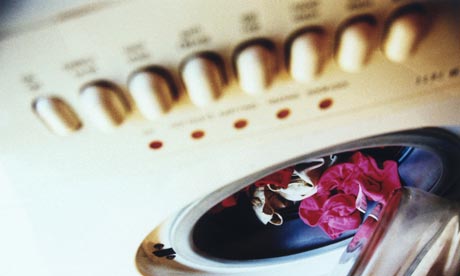
The EU plans to score the efficiency of washing machines with a new labelling scheme. Picture: Getty
What is the European Union playing at? Just as we've begun to understand and accept the energy rating system, it decides to scrap it. At the moment electrical goods other than fridges and freezers have a colour-coded rating system, from A to G. A is the most efficient, G the least. Anyone can see immediately what it means. Manufacturers, in theory, must keep ratcheting up the efficiency of their products to stay within the band.
It's simple and it works. A survey of 7,000 people across Europe by the Energy Saving Trust shows that nine out of 10 recognise these labels. Now that we are able to make an informed choice, there has also been a massive switch towards more efficient products. How does the EU celebrate its success? By threatening to abandon this rating system and replace it with a series of numbers. As if to sow maximum confusion among consumers, the numbers will run in the opposite direction to the current system: the higher the figure, the better the product. The first will be last and the last will be first. Worse still, the top number will keep rising as efficiency improves, ensuring that unless you are prepared to spend an hour or two researching labelling trends every time you want to buy a lightbulb, you'll have no idea how your product compares.
Something like this already happens with fridges and freezers. Almost everyone (even, according to its latest press release, the Energy Saving Trust) believes that fridges and freezers are rated from A to G. They aren't. They are rated from A++ to G. When you buy an A-rated fridge, you are buying the equivalent of a C-rated washing machine. Confused? You should be. As the House of Lords select committee on science and technology reveals, the measure was introduced as a result of "political pressure by the manufacturers".
The spineless Eurocrats caved in. Instead of demanding that A-rated fridges and freezers were improved, they added two new categories: A+ and A++. Then they allowed the manufacturers to stick to the colour coded A-G scale, creating the impression that A remained the top band. Almost everyone has been conned by this scam, and we remain blissfully ignorant that we are still buying lousy products. Recently I told my local electrical retailers that they were inadvertently misselling their fridges and freezers. They were horrified: they hadn't the faintest idea that A wasn't the top band. Mission accomplished: the manufacturers can keep selling their antiquated models and don't have to invest in new plant.
This is evidently the purpose of the proposed new change. Europhiles like me find ourselves perpetually apologising for the institution we support, which seems to have a limitless capacity to disappoint. It allows itself to be kicked from pillar to post by industrial vested interests. As the Corporate Europe Observatory keeps pointing out, the EU fails even to acknowledge that there's a systematic lobbying problem, let alone to address it. The permanent scandals in Brussels make the revelations emerging from the House of Lords look pretty mild. It's as if the whole union is being run on the Italian model. I don't think this is what the founders had in mind.
posted by mary rose lenore eng (please) @ 3:28 AM
0 Comments
Plastic does not go away. It is filling not only our landfills but also our oceans.
 There is now, by weight, 30 times more plastic than plankton in the north Pacific “garbage patch.” This is five times more plastic than Algalita teams had found in 1999. What will the oceans look like in another ten years? What will happen to the aquatic food chain as its base is being replaced by plastic?Chemicals from plastic are also being found in our food, and in our bodies.
The US Centers for Disease Control and Prevention (CDC) released a report showing that 93% of of 2,517 Americans tested had bisphenol-A (an artificial estrogen linked together to form polycarbonate plastic) in their urine. The highest levels were found in children.
NoNurdles.com is dedicated to raising awareness about the adverse public health and environmental impacts of plastic. While plastic has brought many conveniences to my life (such as this computer), and has certain vital uses (some types of medical supplies, for example), single-use, convenience products such as plastic shopping bags and superfluous plastic product packaging, are more difficult to justify. Very little plastic is actually recycled. Plastic breaks down into smaller and smaller pieces but remains chemically intact in the environment, posing a danger to wildlife. Plastic resin micro-pellets, also called nurdles, for example, are now filling the oceans (by weight, one area of the Pacific that was sampled had six times more plastic than plankton). Nurdles are mistaken for food by many marine species, and thus are entering our food chain. Plastic is more directly introduced into the human food chain when it is fed to feedlot cows (as artificial roughage) or is used in food packaging. Bisphenol-A, a synthetic estrogen, is the building block of #7 polycarbonate plastics, used to make Nalgene water bottles and many baby bottles, among other products. It is also part of the epoxy resin that lines most food cans. Even some tea bags contain plastic. The safety of many chemicals used in the manufacture of plastics (not only bisphenol-A but also phthalates, flame retardants, etc.) has been called into question.
posted by mary rose lenore eng (please) @ 3:27 AM
0 Comments
via edd http://www.labormarketinfo.edd.ca.gov/?pageid=1032
posted by f @ 1:35 AM
0 Comments
Local Career Site Sizzles with Green Collar Jobs
posted by f @ 1:17 AM
0 Comments
How the DOL plans to spend worker "bailout" funds.
posted by f @ 1:41 AM
0 Comments
California is the winner in the stimulus race with 1971 projects proposed and a proposed package of $23,194,447,831.
posted by f @ 10:05 PM
0 Comments
LOUISVILLE, Colo. — With what could be the foundation of his new career poking through a gray afternoon sky last month, Benjamin Jacobs closely watched what was happening on the roof of a quaint Louisville fourplex.
Labels: Green Jobs, Solar energy
posted by f @ 9:41 PM
0 Comments

Subscribe to
Posts [Atom]